

War against Hezbollah causing divide in Shi’ite community
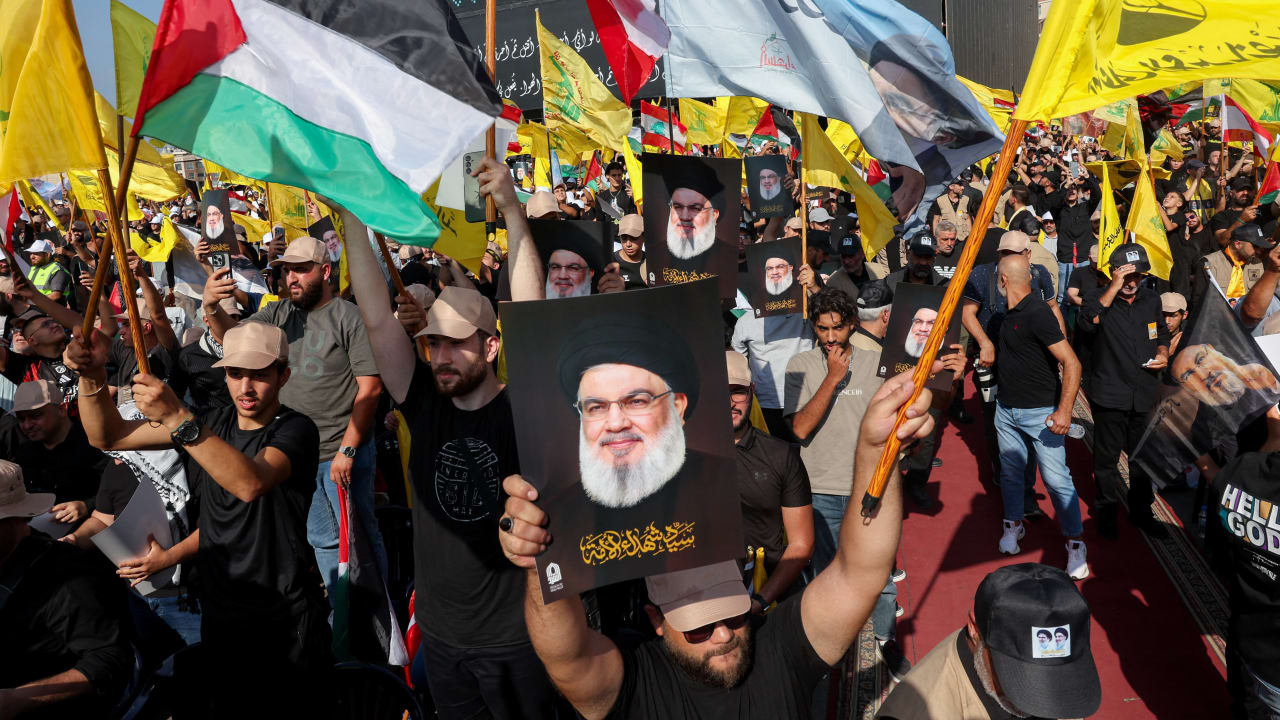
During the first hours of the renewed war in Lebanon, criticism of Hezbollah that had long remained behind closed doors began spilling into public view. After Hezbollah launched rocket fire into Israeli territory on March 2, Israel responded with a large-scale offensive that again displaced many Shi’ite residents and reignited debate within the community over the human and political cost of the group’s actions.
For more stories from The Media Line go to themedialine.org
“This war was destined to happen, whether yesterday, today, or tomorrow, but it will happen because Israel has a dream, a greater Israel, and it is working toward it, so they want to take all of Lebanon,” Noor Shukur, a nurse from southern Lebanon, told The Media Line. She has remained in her home in Tyre, a southern coastal city, and says that despite not being a supporter of Hezbollah, the insecurity of the last 15 months has led her to defend the new confrontation.
“The Lebanese resistance is fighting against those who are trying to steal their land,” she added. The fighting has so far killed more than 900 people in Lebanon, according to Lebanese Health Ministry figures, though those numbers do not provide a clear breakdown between civilians and combatants. Israeli officials say hundreds of Hezbollah fighters are among the dead.
Elsewhere in Beirut, displaced families who have fled across the country describe a very different mood. Many fled from southern and eastern Lebanon or from Beirut’s southern suburbs and now face deep uncertainty over whether they will ever be able to return home. That fear is fueling resentment toward Hezbollah for pulling Lebanon into yet another war.
Some displaced Lebanese interviewed by The Media Line said the latest fighting reinforced their belief that Hezbollah serves Tehran’s interests before Lebanon’s, despite the group’s longstanding claim to act in the national interest. Israel, for its part, says its campaign is aimed at halting Hezbollah rocket fire, pushing the group away from the border, and allowing displaced residents of northern Israel to return home.
The renewed fighting comes after a punishing 2024 campaign that badly weakened Hezbollah. The assassination of Hezbollah’s longtime leader Hassan Nasrallah at the start of Israel’s October-November 2024 invasion deepened the group’s losses. During the broader conflict, about 4,000 people were killed in Lebanon, with Lebanese authorities saying many of the dead were civilians and Israel saying thousands of Hezbollah fighters were among those killed. More than 100 people were also killed in Israel, including about 70 soldiers and 45 civilians.
The group’s setbacks appear to have weakened not only its military position but also its ability to care for its base. After the Second Lebanon War in 2006, Iranian funds helped reconstruct destroyed homes and compensate families that had lost loved ones in the fighting, reinforcing Hezbollah’s standing among many supporters. This time, there is no money for reconstruction and no possibility of rebuilding amid the ongoing fighting. “We are going to lose a lot, we are going to lose people, and our homes, but it is better than remaining silent, waiting for Israel to attack us and enter Lebanon,” Shukur said.
Anger at Israel still outweighs anger at Hezbollah for some
For some displaced Shi’ites, anger at the state and at Israel still outweighs anger at Hezbollah. Mariam, originally from southern Lebanon and now living in Beirut’s southern suburbs, said the group is still seen by some as a defender despite the destruction. “We are angry with the world, with the government, with the [Israeli] enemy, but we are not angry with our people who are fighting for us, because they [the Israeli military] have been shooting and killing us for the last year and a half, and I think that is enough,” she told The Media Line. “It was going to explode anyway,” she added.
Still, the mood in temporary shelters, on the streets, and in cars where displaced families are sleeping is often far more critical. Lebanese analyst Abdallah Khoury told The Media Line that many Shi’ites are asking why they were dragged into the war, even if Hezbollah may yet be able to absorb some of that anger. He said many in the community are exhausted and might accept stronger state authority if it were imposed because Hezbollah no longer offers a political alternative that many find compelling. “In general, there has been outrage, as many people are asking, ‘Why were we dragged into this?’” Khoury said. “But my Shi’ite friends argue that, sooner or later, they believe Hezbollah will be able to absorb this outrage.”
Historically, the Lebanese state has marginalized the Shi’ite community, and Hezbollah has built much of its support since 1982 by combining armed power with social services in areas where the state was often weak or absent. In the Bekaa Valley, southern Lebanon, and Dahiyeh, south of Beirut, residents and analysts say the group also exerts substantial security control and political reach.
Its military setbacks in 2024 reduced Hezbollah’s regional power, and Israel says thousands of the Shi’ite militia’s fighters were killed during the broader conflict. At the national level, though, the group retained much of its authority despite attempts by the central government to disarm it. Even Nabih Berri, Hezbollah’s Shi’ite ally, speaker of the Lebanese Parliament, and head of Amal, backed a cabinet decision to ban Hezbollah’s weapons, a sign of how much the group’s standing has come under pressure.
“We have moved beyond anger toward Hezbollah and entered a situation that, for now, represents a final battle for the party’s existence; many things could change regarding the community’s attitude toward Hezbollah,” Khoury said.
Among some Shi’ites who were staunchly loyal to the group until March 2, the losses are now too great, and they see the decision to attack Israel as suicidal, even if some supporters described it as retaliation for the assassination of Iran’s supreme leader, Ayatollah Ali Khamenei.
Others, by contrast, say displacement and the sense of being abandoned by the Lebanese state have pushed them closer to Hezbollah rather than farther away. They say rejection by other parts of Lebanese society has only reinforced their belief that the group remains their only reliable protector.
On Monday, March 16, the Israel Defense Forces announced the start of a targeted ground operation in southern Lebanon, as tens of thousands of Israelis remained displaced from northern communities because of ongoing rocket fire and border attacks. Israeli Defense Minister Israel Katz said residents of southern Lebanon who had fled or were fleeing their homes would not be allowed to return to the area south of the Litani River until northern Israeli residents could return safely.
Katz said he and Prime Minister Benjamin Netanyahu had ordered troops to destroy Hezbollah infrastructure near the border to prevent the group from reestablishing itself there, describing the objective as similar to operations carried out against Hamas in Rafah, Beit Hanoun, and the tunnels in Gaza.
For now, the renewed war is widening a divide within Lebanon’s Shi’ite community between those who still see Hezbollah as their protector and those who increasingly see it as the force that drew them into another war.
